

The Most Common QMS Pharma Challenges and Solutions
Chakrapani KVC | 8 Apr 2026 | 13 Apr 2026
The pharmaceutical industry operates in one of the most highly regulated environments in the world. Ensuring product quality, patient safety, and regulatory compliance is non-negotiable. This is where a robust Quality Management System (QMS) becomes essential.
However, despite having a QMS in place, many pharmaceutical organizations continue to face persistent operational and compliance hurdles. These QMS pharma challenges not only impact efficiency but can also lead to regulatory penalties, product recalls, and reputational damage.
In this blog, we explore the most common QMS pharma challenges and practical solutions to overcome them, helping organizations move toward a more efficient, compliant, and future-ready quality framework.
What Are QMS Pharma Challenges?
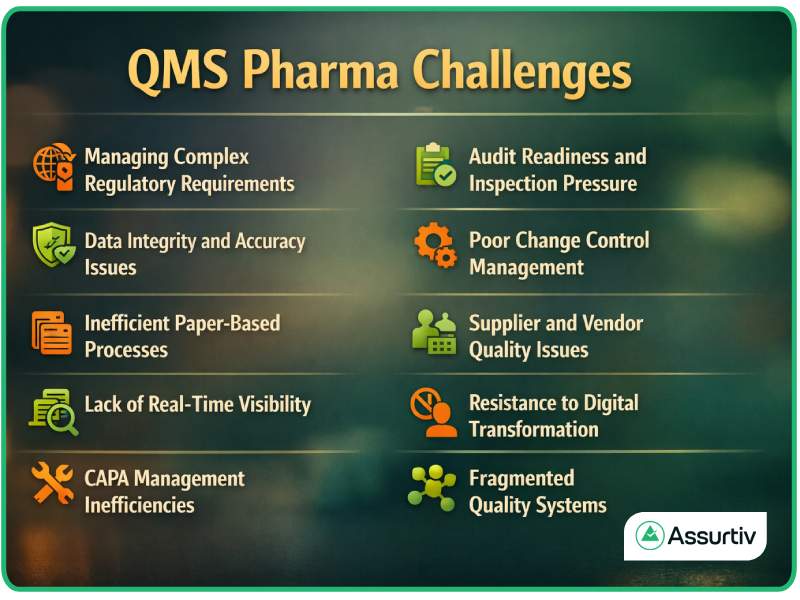
QMS pharma challenges refer to the operational, regulatory, and technological difficulties pharmaceutical companies encounter while implementing and maintaining a Quality Management System. These challenges often arise due to evolving regulations, manual processes, fragmented systems, and lack of real-time visibility.
Addressing these challenges is critical for ensuring compliance with standards such as FDA 21 CFR Part 11, EU GMP Annex 11, and ISO 13485.
Managing Complex Regulatory Requirements
The Challenge
Pharmaceutical companies must comply with multiple global regulations, including FDA, EMA, WHO, and other regional authorities. Keeping up with changing guidelines and ensuring consistent compliance across processes can be overwhelming.
The Solution
Implement a centralized digital QMS that automates compliance workflows and maintains audit-ready documentation. Predefined templates, automated validation, and real-time tracking help organizations stay aligned with regulatory standards.
Data Integrity and Accuracy Issues
The Challenge
Maintaining data integrity is a major concern in pharma. Manual data entry, lack of controls, and inconsistent documentation can lead to errors, data loss, or non-compliance.
The Solution
Adopt an electronic QMS (eQMS) with built-in audit trails, electronic signatures, and role-based access controls. This ensures that all data is secure, traceable, and compliant with regulatory requirements.
Inefficient Paper-Based Processes
The Challenge
Many pharmaceutical companies still rely on paper-based systems for documentation and approvals. These processes are slow, error-prone, and difficult to track, especially during audits.
The Solution
Transition to a paperless, automated QMS. Digital workflows streamline document control, reduce manual intervention, and improve process visibility. This also accelerates approvals and minimizes compliance risks.
Lack of Real-Time Visibility
The Challenge
Without real-time insights, organizations struggle to monitor quality metrics, track deviations, and identify risks proactively. This leads to delayed decision-making and reactive problem-solving.
The Solution
Use QMS platforms with advanced dashboards and analytics. Real-time reporting provides visibility into KPIs, audit findings, CAPA status, and risk areas, enabling data-driven decisions.
CAPA Management Inefficiencies
The Challenge
Corrective and Preventive Actions (CAPA) are critical for quality improvement. However, managing CAPA manually often results in delays, incomplete investigations, and ineffective resolutions.
The Solution
Automate CAPA workflows within the QMS. Ensure proper root cause analysis, assign responsibilities, set deadlines, and track progress to closure. This improves accountability and prevents recurrence of issues.
Audit Readiness and Inspection Pressure
The Challenge
Unannounced audits and regulatory inspections create significant pressure on pharmaceutical teams. Preparing documents and ensuring compliance at short notice can be stressful and inefficient.
The Solution
Maintain continuous audit readiness with a digital QMS. Features like automated audit trails, centralized document storage, and quick retrieval capabilities ensure organizations are always inspection ready.
Poor Change Control Management
The Challenge
Managing changes in processes, equipment, or documentation without proper controls can lead to compliance risks and operational disruptions.
The Solution
Implement structured change control workflows. A QMS should enable impact assessment, approval processes, version control, and complete traceability of all changes.
Supplier and Vendor Quality Issues
The Challenge
Pharmaceutical companies depend on suppliers for raw materials and services. Poor vendor quality management can affect product quality and compliance.
The Solution
Use a QMS with integrated supplier management features. Evaluate vendor performance, track compliance, and maintain qualification records to ensure a reliable supply chain.
Resistance to Digital Transformation
The Challenge
Employees may resist adopting new technologies due to lack of training, fear of change, or unfamiliarity with digital systems.
The Solution
Invest in user training, change management strategies, and intuitive QMS platforms. A user-friendly interface and proper onboarding can significantly improve adoption rates.
Fragmented Quality Systems
The Challenge
Many organizations use disconnected tools and systems for managing quality processes. This leads to data silos, duplication of work, and lack of coordination.
The Solution
Adopt an integrated QMS platform that unifies all quality processes, including document management, audits, CAPA, and risk management. Centralization improves collaboration and efficiency.
Emerging Trends in Overcoming QMS Pharma Challenges

To stay competitive, pharmaceutical companies are increasingly adopting modern technologies such as:
- Cloud-based QMS solutions for scalability and accessibility
- AI-driven analytics for predictive quality insights
- Automation tools to reduce manual workload
- Mobile-enabled platforms for remote access and faster decision-making
These innovations are helping organizations move from reactive compliance to proactive quality management.
How EQMS Helps Solve QMS Pharma Challenges
An Electronic Quality Management System (EQMS) plays a crucial role in addressing these challenges. By digitizing quality processes, EQMS:
- Automates workflows and approvals
- Centralizes documentation and data
- Ensures compliance with global standards
- Provides real-time visibility into quality metrics
- Enhances collaboration across teams
With EQMS, pharmaceutical organizations can transition from manual, fragmented systems to a streamlined, efficient, and compliant quality ecosystem.
Conclusion
The pharmaceutical industry faces numerous challenges in maintaining an effective Quality Management System. From regulatory complexities to data integrity issues and inefficient processes, these QMS pharma challenges can significantly impact business performance.
However, with the right strategies and the adoption of modern digital solutions like EQMS, organizations can overcome these obstacles and build a resilient quality framework.
In today’s compliance-driven landscape, investing in a robust QMS is not just about meeting regulatory requirements—it’s about ensuring long-term success, operational excellence, and patient safety.
Frequently Asked Questions (FAQs)
What are the most common QMS pharma challenges?
The most common QMS pharma challenges include regulatory compliance, data integrity issues, paper-based processes, audit readiness, and inefficient CAPA management. These challenges can impact quality, efficiency, and compliance.
How can pharmaceutical companies overcome QMS challenges?
Pharmaceutical companies can overcome these challenges by implementing EQMS that automates workflows, ensures compliance, and provides real-time insights into quality processes.
Why is data integrity important in pharma QMS?
Data integrity ensures that all records are accurate, complete, and reliable, which is critical for regulatory compliance and patient safety. Poor data integrity can lead to compliance violations and product risks.
How does EQMS improve audit readiness?
EQMS maintains centralized documentation, audit trails, and automated reporting, making it easier to retrieve information during audits and inspections.
What is the role of CAPA in QMS?
CAPA helps identify root causes of issues and implement corrective and preventive actions. Effective CAPA management improves product quality and prevents recurring problems.